
10 Essential Safety Tips for Online Privacy and Personal Security
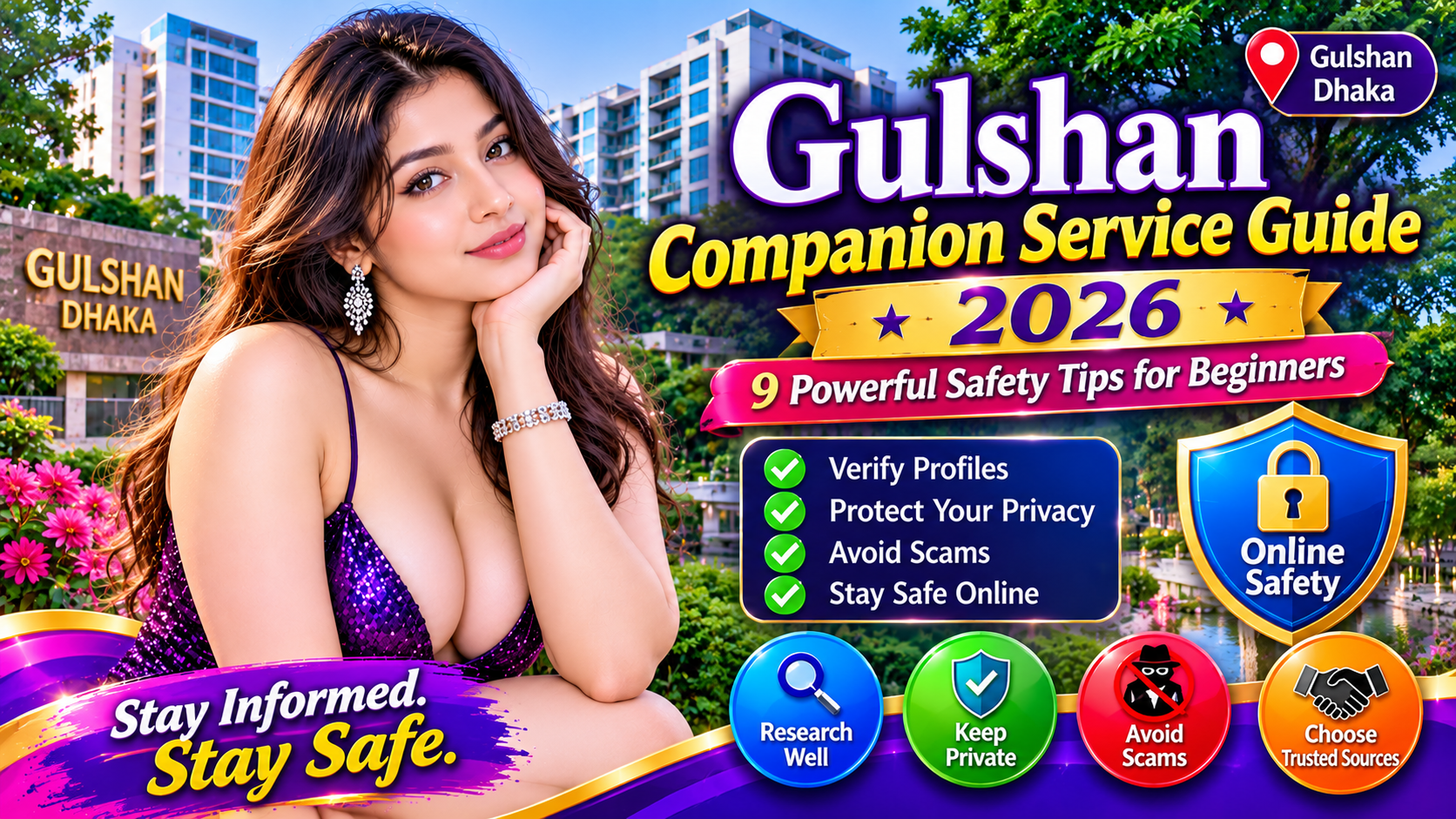
Welcome to the Gulshan Companion Service Guide,
an educational resource covering online privacy, identity awareness,
fake profiles, scam prevention and responsible digital communication.
Learn how to recognize online warning signs and protect your personal
information when researching websites and digital platforms connected
to Gulshan, Dhaka.
Updated Safety Awareness Guide • 2026
Understanding Online Safety in Gulshan
Gulshan is a well-known residential and commercial area of Dhaka.
People researching online information may encounter different
websites, advertisements, social media profiles and third-party
platforms. However, a professional-looking website or attractive
profile does not automatically prove that its information is genuine.
This Gulshan Companion Service Guide explains
practical ways to protect personal information, identify suspicious
online activity and understand consent and privacy. The purpose is
to encourage informed decisions and responsible digital awareness.
For general website information, you can visit
Dhaka Call Dhaka
.
1. Research Online Information Carefully
When researching information connected to Gulshan, do not depend
on a single website, advertisement or social media post. Online
content can be incomplete, outdated or deliberately misleading.
Take time to examine the information before trusting it.
Important Website Checks
- Look for a clear privacy policy and terms of use.
- Check whether information is consistent across website pages.
- Be careful with websites containing suspicious redirects.
- Review important claims using independent sources.
- Do not assume HTTPS guarantees that a website is trustworthy.
You can explore more general information and educational articles
through the
Dhaka Call Dhaka Blog and Guides
.
2. Recognize Fake Profiles and Identity Risks
Fake online profiles may use copied photographs, invented identities
or misleading descriptions. Some accounts imitate genuine individuals
to collect personal information or create a false sense of trust.
Common Warning Signs
- Photographs appearing on unrelated websites or accounts.
- Inconsistent names, descriptions or profile details.
- Pressure to make immediate decisions.
- Requests for sensitive documents without a clear reason.
- Suspicious links and unusual information requests.
A profile photograph, follower count or attractive description
is not proof of identity. Always examine information carefully
and avoid sharing sensitive details with unknown accounts.
3. Protect Your Personal Information
Personal information can be misused when it is shared without
consideration. Avoid giving unknown accounts access to details
that could expose your identity, location, finances or private life.
Keep These Details Private
- Passwords and one-time verification codes.
- National identity and passport information.
- Home address and real-time location.
- Banking information and account recovery details.
- Private photographs and personal documents.
Use strong, unique passwords and enable two-factor authentication
wherever possible. Review your social media privacy settings
regularly and remove unnecessary access permissions.
4. Understand Photo and Identity Risks
Photographs can reveal more information than people realize.
Background objects, location tags, visible documents and reflections
may expose private details.
- Review photographs before sharing them online.
- Remove unnecessary location information when appropriate.
- Avoid sending private images to unknown accounts.
- Never distribute another person’s photographs without permission.
- Be careful with images that reveal your daily routine.
Sharing private or intimate images without informed consent can
seriously harm another person and may have legal consequences.
5. Recognize Online Scams and Suspicious Requests
Online scams may involve impersonation, phishing links, fake receipts,
suspicious payment demands and threats. Scammers often use urgency
or emotional pressure to influence someone’s decisions.
Warning Signs of Digital Fraud
- Unexpected requests for money or financial information.
- Pressure to transfer money immediately.
- Unverified payment instructions or unfamiliar links.
- Requests for passwords, PINs or verification codes.
- Threats demanding money to expose private information.
Never share your banking password, PIN or one-time verification code.
Verify information independently and contact your financial institution
through its official communication channel if you suspect fraud.
For general consumer protection information, visit
FTC Consumer Advice
.
6. Respect Consent and Personal Boundaries
Consent means a freely given, informed and voluntary agreement.
It should never be obtained through threats, manipulation,
deception or pressure. Every person has the right to establish
personal boundaries and change their mind.
Respectful Boundary Principles
- Respect another person’s decisions without pressure.
- Do not assume agreement from silence.
- Never use threats or intimidation.
- Respect privacy and personal space.
- Stop unwanted communication when requested.
Responsible communication begins with respect, honesty and clear
personal boundaries. These principles apply to online and offline
interactions.
7. Practice Responsible Digital Communication
Online conversations should remain respectful and transparent.
Avoid sending repeated unwanted messages, impersonating another
person or sharing private conversations publicly without permission.
Before forwarding a message, photograph or screenshot, consider
whether it contains another person’s private information.
Respect their right to decide how personal information is shared.
For more website information and related resources, explore the
Dhaka Call Dhaka website
.
8. Improve Your Digital Security
Good cybersecurity habits can reduce the risk of phishing,
account compromise and unauthorized access. Keep devices updated
and avoid opening unexpected attachments or unfamiliar links.
Practical Cybersecurity Habits
- Use a unique password for each important account.
- Enable two-factor authentication.
- Install updates from trusted sources.
- Avoid accessing sensitive accounts on public devices.
- Check website addresses before entering personal details.
- Review account login activity and security alerts.
For additional guidance, explore
CISA Secure Our World
and
Bangladesh e-GOV CIRT
.
9. Understand Legal and Safety Awareness in Bangladesh
Online harassment, identity misuse, threats and unauthorized
distribution of private information can raise serious legal concerns.
Avoid relying on social media comments or unofficial posts as a
substitute for current legal information.
Consult the official
Bangladesh Laws website
for published legal materials. You can also visit the
Bangladesh Police website
for official public safety information.
consult a qualified legal professional or the appropriate authority.
10. Create a Personal Safety Plan
A personal safety plan can help you respond calmly if an online
interaction becomes uncomfortable, suspicious or threatening.
You do not have to continue a conversation that makes you feel unsafe.
- Stop responding to suspicious or threatening messages.
- Preserve relevant messages, screenshots and records.
- Block and report abusive accounts where appropriate.
- Change compromised passwords and secure your accounts.
- Contact your bank if financial information may be exposed.
- Seek assistance from appropriate authorities when necessary.
Keep evidence in a secure place and avoid confronting anyone
who may pose a physical or digital threat.
Online Safety Checklist for Gulshan Readers
Review these precautions to improve your online safety habits.
- Check website credibility and privacy information.
- Look for signs of copied or misleading profiles.
- Keep passwords and verification codes private.
- Avoid sharing sensitive documents unnecessarily.
- Be cautious of urgent or suspicious payment requests.
- Respect consent and personal boundaries.
- Keep devices and applications updated.
- Save evidence if you experience online harassment or fraud.
Frequently Asked Questions
What is the purpose of the Gulshan Companion Service Guide?
The Gulshan Companion Service Guide is an educational resource
about online privacy, fake profile awareness, scam prevention,
consent and digital security for readers researching online
information connected to Gulshan.
How can I identify a fake online profile?
Look for inconsistent profile details, copied photographs,
suspicious links, pressure tactics and requests for sensitive
personal information. A photograph or follower count is not
proof of identity.
How can I protect my personal information online?
Use strong unique passwords, enable two-factor authentication,
limit personal information sharing and review your account
privacy settings regularly.
What should I do if I receive a suspicious payment request?
Do not rush into a payment. Avoid sharing banking credentials
or verification codes. Verify claims independently and contact
your financial institution if you suspect fraud.
Where can I find more articles and website information?
You can explore the
Dhaka Call Dhaka Blog and Guides
for additional website articles and information.
Why are consent and privacy important?
Consent and privacy protect personal boundaries, reduce the risk
of harassment and help people communicate respectfully.
Explore More Website Resources
If you want to explore the website structure and available
informational pages, use these resources:
Final Thoughts: Gulshan Companion Service Guide
The Gulshan Companion Service Guide highlights
the importance of informed online decisions, privacy protection,
identity awareness and respectful communication. Whether you are
researching websites or communicating through digital platforms,
take time to verify information and recognize warning signs.
Your personal information, safety and boundaries deserve protection.
Stay cautious, respect consent and use trusted sources when you need help.
© 2026. All rights reserved. Educational content for online safety awareness.