
2026 PRIVACY EDITION
Discover practical ways to protect personal information, secure
online accounts, recognize digital threats and maintain privacy
in everyday internet activities.
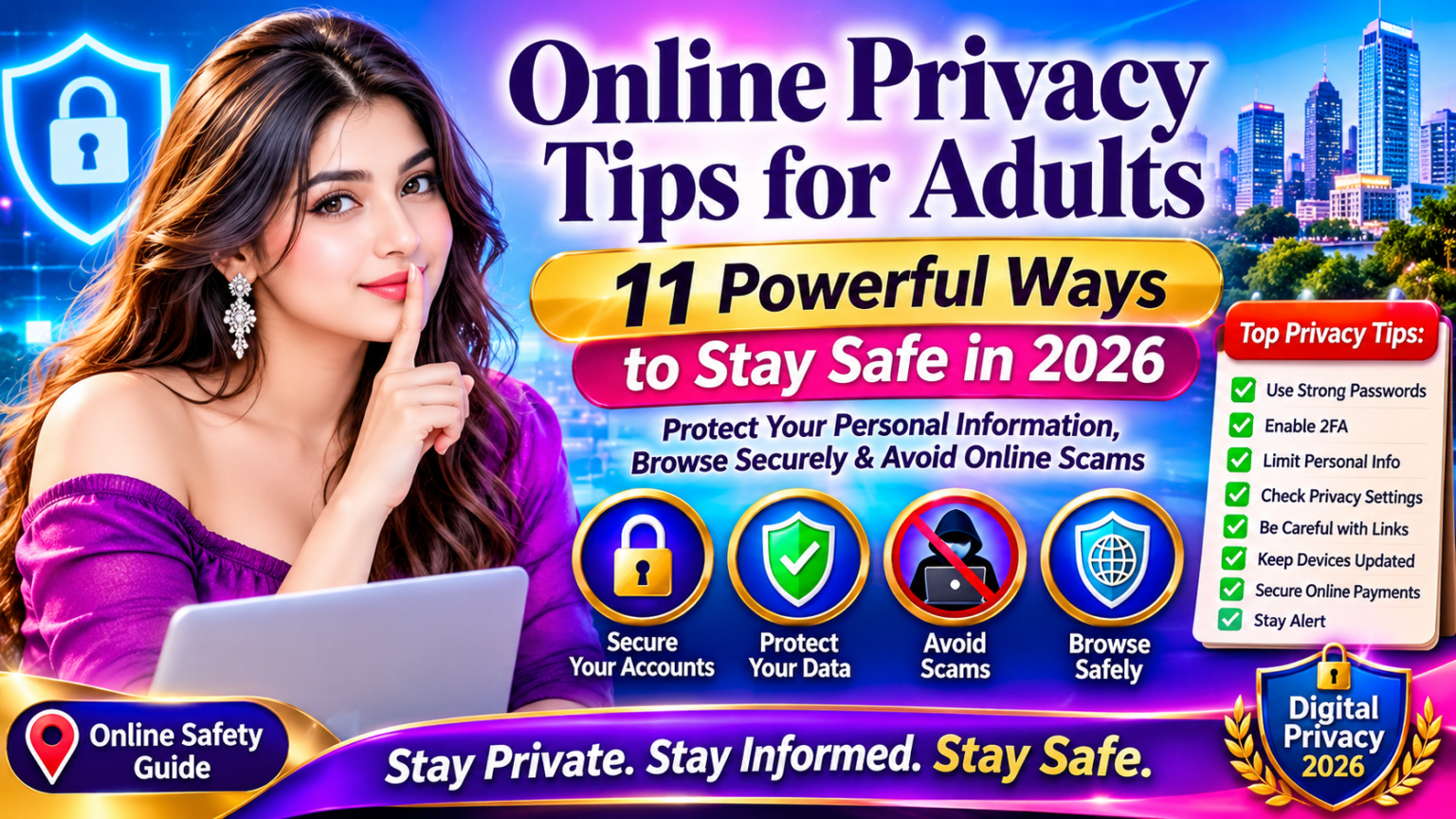
anyone who uses websites, social media, messaging applications
and online services. Everyday internet activities can involve
sharing personal information, photographs, contact details and
other data that may be exposed if proper precautions are not taken.
Online privacy is not only about hiding personal information.
It also involves understanding how websites collect data,
recognizing suspicious accounts, protecting passwords and
controlling who can access your digital information.
Adults may encounter phishing messages, fake profiles, identity
impersonation, suspicious links and financial scams while browsing
online. Developing responsible digital habits can help reduce
these risks and improve personal security.
This guide explains ten practical privacy strategies that can
help you protect your information and make safer decisions
across different online platforms.
Why Online Privacy Tips for Adults Matter in 2026
Digital platforms make communication, information sharing and
online activities convenient. However, every online interaction
can involve some level of personal data exposure.
Websites may request email addresses, phone numbers, account
details or location permissions. Social media platforms may
also reveal personal interests, photographs and daily activities
through public posts.
Without proper privacy awareness, this information could be
misused for identity theft, impersonation, harassment, phishing
or financial fraud.
Learning how to manage digital information is therefore an
important part of responsible internet use.
Explore more educational information through our
online awareness blog
.
1. Online Privacy Tips for Adults: Understand Your Personal Data
The first step toward better online privacy is understanding
what personal information you share and where it may be stored.
Even ordinary details can become sensitive when combined with
other information.
Examples of Personal Information
- Full name and date of birth.
- Home and workplace addresses.
- Personal phone numbers and email addresses.
- Government identification information.
- Private photographs and conversations.
- Financial and banking details.
- Location and travel information.
Avoid sharing unnecessary personal information with unfamiliar
websites or accounts. Before completing an online form, consider
whether the requested information is genuinely necessary.
Personal information should only be shared when there is a
legitimate reason and you understand how it may be used.
2. Create Strong Passwords and Secure Your Accounts
Weak or reused passwords can make online accounts more vulnerable.
If one website experiences a data breach, attackers may try the
same password on other platforms.
Practical Password Security Tips
- Use a different password for every important account.
- Create long and difficult-to-guess passwords.
- Avoid using birthdays, names or phone numbers.
- Consider using a reputable password manager.
- Enable multi-factor authentication where available.
- Change passwords promptly if an account is compromised.
Multi-factor authentication adds another layer of protection
beyond a password. Depending on the service, this may involve
an authenticator application, security key or another approved
verification method.
Never share passwords or one-time verification codes with
unfamiliar people.
4. Recognize Fake Profiles and Online Impersonation
Fake profiles can be used to collect personal information,
impersonate individuals or mislead other internet users.
Some accounts use copied photographs and fabricated details
to appear genuine.
Common Warning Signs of Fake Profiles
- Inconsistent names or personal information.
- Photographs appearing on unrelated accounts.
- Very limited or suspicious account history.
- Unusual requests for private photographs.
- Pressure to click external links.
- Requests for passwords or verification codes.
A single warning sign does not automatically prove that an
account is fake. Consider the overall behaviour and avoid
sharing sensitive information until you have independently
assessed the situation.
Be careful when interacting with unfamiliar online accounts.
You can explore the
digital safety articles
for additional awareness information.
5. Avoid Phishing Messages and Suspicious Website Links
Phishing is a technique used to trick people into revealing
sensitive information or opening harmful links. Messages may
appear to come from banks, delivery companies, social platforms
or other familiar organizations.
How to Identify Suspicious Messages
- Unexpected requests to verify account information.
- Messages creating pressure or fear.
- Links using misspelled or unfamiliar domain names.
- Unexpected attachments or downloads.
- Requests for passwords or one-time codes.
- Unusual messages asking for immediate payment.
Avoid clicking suspicious links. If a message claims to come
from a familiar organization, visit its official website
independently instead of following the provided link.
You can learn more about phishing and online threats through
CISA Secure Our World
.
6. Secure Your Phone, Computer and Other Devices
Personal devices contain valuable information, including
photographs, messages, documents, saved passwords and
account access. Keeping these devices secure is an important
part of digital privacy.
Essential Device Security Measures
- Use a secure screen lock or biometric authentication.
- Install operating system and security updates.
- Download applications from official sources.
- Remove applications you no longer use.
- Review device access and security settings.
- Back up important information securely.
- Avoid leaving unlocked devices unattended.
Be cautious when allowing applications to access your camera,
microphone, contacts or location. Only provide permissions
that are necessary for the application’s legitimate purpose.
7. Use Public Wi-Fi Carefully to Protect Online Privacy
Public Wi-Fi is available in many public locations, including
cafes, airports, hotels and shopping areas. Although convenient,
an unfamiliar network may create security risks.
Public Wi-Fi Safety Tips
- Confirm the correct network name before connecting.
- Avoid accessing sensitive accounts on untrusted networks.
- Do not ignore browser security warnings.
- Disable automatic connections to unknown networks.
- Use mobile data for sensitive activities when appropriate.
- Disconnect from networks you no longer need.
Avoid assuming that a Wi-Fi network is safe simply because
it is available at a familiar location. Always use secure
connections and keep your device updated.
8. Review Website Cookies, App Permissions and Privacy Policies
Websites and applications may collect information through
cookies, account settings, device permissions and other
technologies. Understanding these settings can help you
make more informed privacy decisions.
What You Should Review
- What personal information a website requests.
- Whether a privacy policy is available.
- How an application uses camera and microphone access.
- Whether location access is necessary.
- What information may be shared with third parties.
- How to manage or delete your account information.
Read privacy policies before submitting sensitive information.
If a website does not clearly explain its data practices,
consider whether you should provide the requested details.
For additional information about consumer privacy and online
protection, visit
FTC Consumer Advice
.
9. Protect Financial Information and Online Transactions
Financial information requires special protection. Fraudulent
messages, fake payment pages and impersonation attempts can
expose banking credentials or other sensitive details.
Financial Privacy Best Practices
- Never share your banking PIN or password.
- Keep one-time verification codes private.
- Use official banking applications and websites.
- Check transaction details before confirming payments.
- Enable transaction notifications where available.
- Review account activity regularly.
- Contact your financial institution if suspicious activity appears.
If you suspect that your financial information has been exposed,
contact your bank or payment provider through its official
communication channels. Follow its instructions to secure
the affected account.
Never share a banking password, PIN or one-time verification
code with anyone claiming to provide account support.
10. Manage Your Digital Footprint and Personal Information
A digital footprint is the information associated with your
online activities. It may include public posts, comments,
photographs, account profiles and information shared across
different websites.
Some information may remain accessible even after a post or
account has been deleted. Therefore, it is important to think
carefully before publishing personal content.
Ways to Manage Your Digital Footprint
- Review old social media posts and public photographs.
- Remove unnecessary personal information from public profiles.
- Check privacy settings on frequently used platforms.
- Delete unused accounts when appropriate.
- Avoid publishing private conversations.
- Search for your own publicly visible information periodically.
- Report unauthorized use of your identity.
Responsible information sharing can help reduce unnecessary
exposure and improve long-term digital privacy.
Online Privacy Tips for Adults: Essential Safety Checklist
Use this checklist to review your current digital habits
and identify areas where additional privacy protection
may be necessary.
10 Important Privacy Checks
- Understand what personal information you share online.
- Use unique and strong passwords.
- Enable multi-factor authentication.
- Review social media privacy settings.
- Recognize fake profiles and suspicious accounts.
- Avoid phishing messages and unknown links.
- Keep your phone and computer updated.
- Review application permissions regularly.
- Protect financial information and verification codes.
- Manage your public digital footprint.
Useful Online Privacy and Cybersecurity Resources
The following organizations provide educational information
about digital security, consumer protection and personal
privacy.
Bangladesh e-GOV CIRT
– Cybersecurity awareness and information.
Bangladesh Police
– Official police information.
Bangladesh Laws
– Bangladesh legislation and legal information.
FTC Consumer Advice
– Consumer protection and online scam awareness.
CISA Secure Our World
– Password, phishing and cybersecurity guidance.
National Cybersecurity Alliance
– Digital privacy and online safety education.
Google Safe Browsing
– Information about dangerous websites and online threats.
Frequently Asked Questions About Online Privacy Tips for Adults
1. What are Online Privacy Tips for Adults?
Online Privacy Tips for Adults are practical recommendations
for protecting personal information, securing digital accounts,
recognizing suspicious activity and managing online privacy.
2. Why is online privacy important for adults?
Online privacy helps reduce the risk of identity misuse,
phishing, financial fraud, impersonation and unauthorized
access to personal information.
3. How can I protect my personal information online?
Share only necessary information, use strong passwords,
review privacy settings, avoid suspicious links and
protect sensitive documents and photographs.
4. What makes a password secure?
A secure password should be long, difficult to guess and
unique to the account. A reputable password manager can
help manage different passwords.
5. How can I recognize a fake online profile?
Look for inconsistent personal details, suspicious
photographs, unusual requests and limited verifiable
account history. Consider the overall behaviour rather
than relying on one warning sign.
6. Is public Wi-Fi safe for personal accounts?
Public Wi-Fi may create security risks, particularly on
unfamiliar networks. Avoid sensitive activities on
untrusted connections and keep your device updated.
7. What should I do if I receive a phishing message?
Avoid clicking suspicious links or opening unexpected
attachments. Verify the sender independently and report
suspicious messages through the relevant platform.
8. Why should I review application permissions?
Applications may request access to your camera, microphone,
contacts and location. Reviewing permissions helps you
limit unnecessary access to personal information.
9. What is a digital footprint?
A digital footprint is the information associated with
your online activities, including public posts, photographs,
comments and account information.
10. Where can I learn more about online privacy?
You can explore resources from Bangladesh e-GOV CIRT,
Bangladesh Police, CISA, FTC Consumer Advice and the
National Cybersecurity Alliance.
Final Thoughts: Make Online Privacy a Daily Habit
Following these Online Privacy Tips for Adults
can help you become more aware of how personal information
is shared, stored and accessed across digital platforms.
Strong passwords, careful social media settings, secure devices,
responsible browsing and awareness of suspicious messages are
important parts of everyday online safety.
Privacy protection is not a one-time task. Review your accounts,
permissions and security settings regularly as your online
activities change.
For more website information, visit the
Call Girl Dhaka homepage
,
explore the
educational blog
or review the
website sitemap
.
Make informed decisions, protect your personal information
and practice responsible digital communication every day.
Stay informed, protect your personal data and browse responsibly.
3. Improve Social Media Privacy Settings
Social media platforms can reveal personal details through
photographs, comments, public profiles and location-based posts.
Reviewing privacy settings regularly can help you control
who sees your information.
Social Media Privacy Practices
Think carefully before sharing travel plans, daily routines
or real-time location information publicly. Information that
seems harmless today may create privacy concerns later.