
2026 SAFETY EDITION
Explore practical information about online privacy, fake profiles,
personal boundaries, scam awareness and responsible digital
communication in Dhaka.
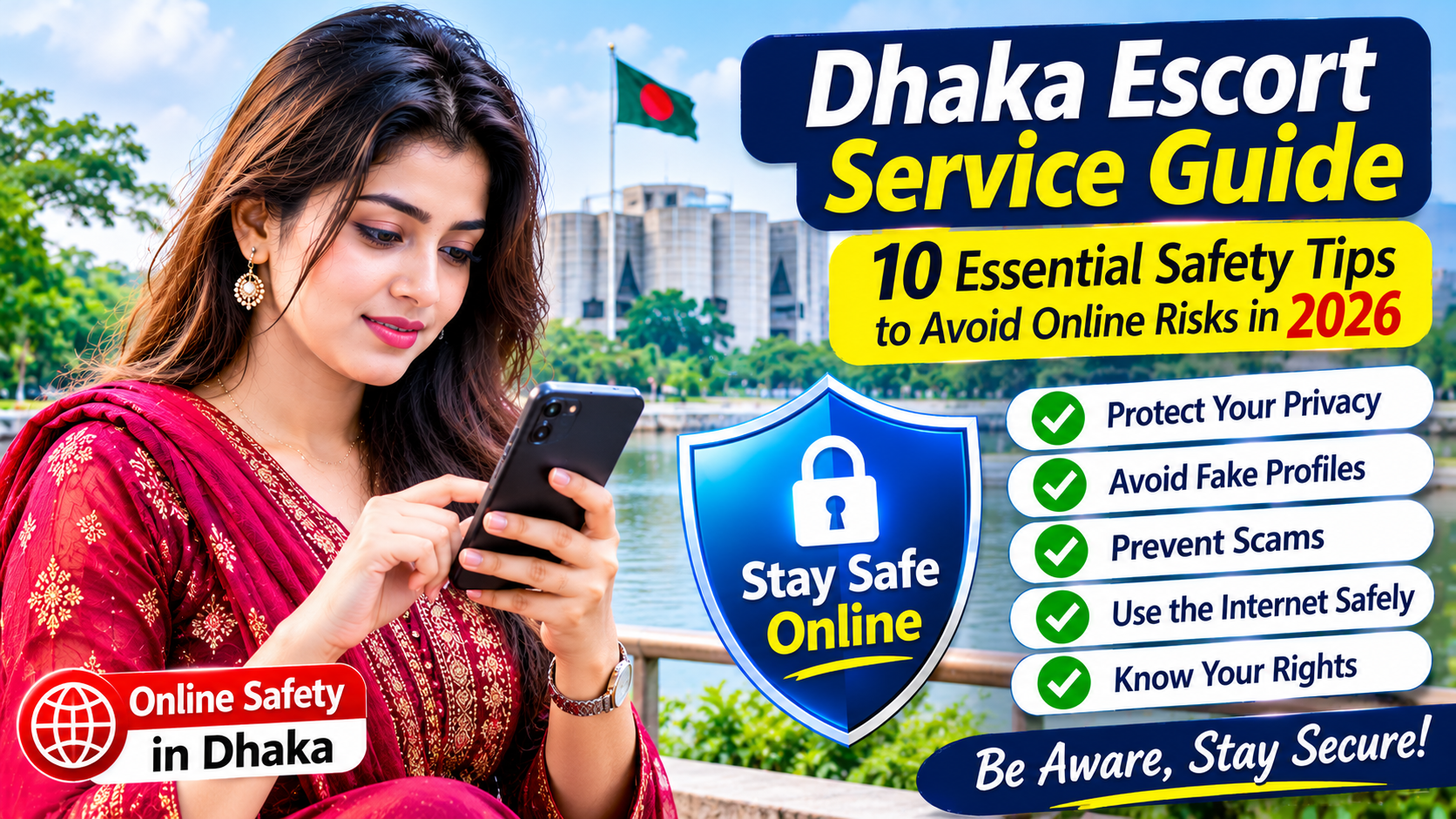
Dhaka Escort Service Guide: Online Privacy and Personal Safety Tips
about online privacy, identity awareness and personal safety when
exploring websites or digital content related to adult companion
topics in Dhaka. Online information is easy to access, but not every
website, profile or communication channel is genuine or trustworthy.
Visitors may encounter misleading photographs, impersonation,
suspicious payment requests, phishing links and attempts to collect
sensitive personal information. Understanding these warning signs
can help people make more informed decisions and reduce avoidable
online risks.
This guide covers ten essential safety principles, including profile
awareness, privacy protection, consent, scam prevention, responsible
communication and cybersecurity. Its purpose is education and
awareness, not the promotion or arrangement of commercial services.
Why a Dhaka Escort Service Guide Should Focus on Online Safety
Online platforms can contain genuine information, misleading
advertisements and fraudulent activity. A professional-looking
website or profile does not automatically prove that its information
is accurate.
People should consider what information they share, how their
photographs may be used and whether an unfamiliar account is asking
for money, identity documents or private details.
A responsible online safety approach includes independent
verification, informed consent, privacy protection and lawful
behaviour. These principles apply to all types of digital
interactions.
For more general information, explore the
online awareness articles
available on this website.
1. Dhaka Escort Service Guide: Understand Online Risks
Online awareness is an important part of responsible internet use.
Websites discussing adult topics may contain user-generated content,
promotional statements, external links and personal information.
Visitors should evaluate these elements carefully before trusting
what they see.
Important Online Warning Signs
- Websites without clear ownership or reliable information.
- Unrealistic promises or exaggerated claims.
- Repeated requests for sensitive personal information.
- Pressure to make immediate decisions.
- Suspicious links or unexpected file downloads.
- Missing or unclear privacy policies.
Attractive graphics, professional language and photographs do not
guarantee that a website is trustworthy. Review available
information independently and avoid sharing private details with
unknown sources.
You can also review the
website sitemap
to understand the site’s available informational sections.
2. Recognize Fake Profiles and Identity Impersonation
Fake profiles are a common online safety concern. Fraudulent
accounts may use copied photographs, fabricated descriptions or
another person’s identity to mislead visitors.
Common Fake Profile Indicators
- Photographs appearing on unrelated websites or accounts.
- Inconsistent names or descriptions across platforms.
- Accounts with little verifiable history.
- Unusual requests for private information.
- Suspicious external links or unexpected downloads.
- Refusal to clarify obvious inconsistencies.
One warning sign alone does not prove that an account is fraudulent.
Consider the overall pattern and avoid making assumptions based
only on photographs or profile appearance.
Never share identity documents, passwords or private photographs
simply because an unfamiliar profile requests them.
3. Protect Personal Information and Online Privacy
Personal information can be misused when it reaches an untrusted
person or website. Visitors should carefully consider what they
share with unfamiliar profiles, websites and messaging accounts.
Information That Requires Extra Protection
- Home and workplace addresses.
- Personal identification documents.
- Banking information and payment credentials.
- Passwords and verification codes.
- Private photographs and conversations.
- Real-time location and travel details.
Avoid publishing sensitive information publicly. Review social
media privacy settings, limit access to personal photographs and
use strong passwords for important accounts.
For additional consumer privacy and scam-awareness information,
visit
FTC Consumer Advice
.
4. Understand Photograph Misuse and Identity Theft
Photographs can reveal more information than people realize.
Images may contain location clues, personal documents, workplace
details or other identifying information.
Unauthorized copying or distribution of photographs can create
privacy and reputational risks. Never assume that an image is
genuine simply because it appears on a website or profile.
Ways to Reduce Photo Privacy Risks
- Review photographs before publishing them online.
- Remove unnecessary location information where appropriate.
- Avoid sharing images containing identification documents.
- Use available platform privacy controls.
- Report suspected impersonation through official platform tools.
- Preserve evidence if your photographs are misused.
If someone uses your photographs without permission, document the
relevant account and content. Use the platform’s official reporting
process and seek appropriate assistance when necessary.
5. Recognize Online Scams and Manipulative Behaviour
Online scams may involve false identities, misleading claims,
impersonation or unexpected requests for money. Fraudulent accounts
sometimes create urgency to discourage people from checking
information carefully.
Common Scam Warning Signs
- Unexpected requests for advance payments.
- Threats or pressure designed to create panic.
- Claims requiring immediate financial action.
- Requests for one-time passwords or verification codes.
- Suspicious links presented as verification pages.
- Attempts to move conversations to unverified accounts.
Do not send money or sensitive information simply because someone
claims that an urgent situation exists. Pause, verify the information
independently and avoid interacting with suspicious links.
Threats, blackmail and extortion should be taken seriously.
Preserve relevant evidence and seek assistance through appropriate
official channels.
For cybersecurity awareness and information in Bangladesh, visit
Bangladesh e-GOV CIRT
.
6. Respect Consent, Personal Boundaries and Privacy
Consent is an essential principle in every personal interaction.
It should be voluntary, informed, specific and reversible. Silence,
pressure or a previous agreement should never be treated as
automatic permission for something different.
Responsible Boundary Practices
- Respect a person’s decision to decline an interaction.
- Never pressure anyone to share private photographs.
- Do not publish private conversations without permission.
- Respect personal space and individual boundaries.
- Do not use threats, intimidation or manipulation.
- Stop an interaction when consent is withdrawn.
Respectful communication protects everyone’s dignity. Consent and
privacy should remain important in both online and offline
interactions.
7. Practice Responsible Digital Communication
Digital communication can be misunderstood when messages lack
context. Clear language, respectful behaviour and appropriate
boundaries can help prevent unnecessary conflict.
Healthy Online Communication Habits
- Use respectful and non-threatening language.
- Do not repeatedly contact someone who has declined communication.
- Avoid sharing another person’s private information.
- Never impersonate individuals or organizations.
- Think carefully before forwarding private messages.
- Use platform blocking and reporting tools when necessary.
Explore more educational content through the
online safety and awareness blog
.
8. Avoid Suspicious Payment Requests and Financial Risks
Financial fraud can involve false claims, impersonation, fake
confirmations and pressure to transfer money. Visitors should
never assume that an online payment request is genuine.
Basic Financial Safety Practices
- Never disclose banking passwords or PINs.
- Do not share one-time verification codes.
- Check transaction details before confirming a payment.
- Be cautious about unusual payment requests.
- Keep transaction records when a legitimate payment is made.
- Contact your financial institution through official channels if fraud is suspected.
If you believe that a payment account has been compromised,
contact the relevant financial institution promptly. Follow its
instructions about securing accounts and reviewing suspicious
transactions.
9. Improve Digital Security Before Browsing
A secure device and carefully managed online accounts can reduce
exposure to common cybersecurity threats. Good security habits
should be maintained regularly rather than only after a problem
occurs.
Digital Security Checklist
- Use unique passwords for important accounts.
- Enable multi-factor authentication.
- Keep your operating system and browser updated.
- Download applications from official sources.
- Avoid suspicious attachments and unexpected downloads.
- Use caution when connecting to public Wi-Fi.
- Review account login alerts and security settings.
- Back up important files securely.
The
CISA Secure Our World
resource provides practical guidance about passwords, phishing
and software updates.
10. Understand Legal Awareness and Reporting Options
Online activity may involve privacy, identity, financial and
cybersecurity concerns. Laws and reporting procedures can depend
on the facts of a situation and the applicable jurisdiction.
Visitors should avoid relying on social media posts or anonymous
comments as legal advice. For a specific concern, consult qualified
legal professionals or appropriate official authorities.
When You Encounter a Serious Online Problem
- Preserve relevant messages and screenshots.
- Record dates and details of suspicious interactions.
- Avoid deleting evidence before documenting it.
- Secure affected accounts and change compromised passwords.
- Use official platform reporting options.
- Seek appropriate legal or law-enforcement assistance.
Useful official information is available through
Bangladesh Police
and
Bangladesh Laws
.
Dhaka Escort Service Guide: Personal Safety Checklist
Review these important safety points before sharing information
or interacting with unfamiliar online accounts.
10 Important Online Safety Checks
- Check whether a website provides clear information.
- Look for signs of fake profiles or impersonation.
- Protect your address and personal identification.
- Never share passwords or verification codes.
- Avoid suspicious links and unexpected downloads.
- Be cautious about urgent payment requests.
- Respect consent and personal boundaries.
- Secure your phone and online accounts.
- Preserve evidence of threats or suspected fraud.
- Use official sources when seeking assistance.
Useful Online Safety Resources for Dhaka Visitors
The following organizations provide information that can help
visitors understand cybersecurity, privacy and consumer protection.
Bangladesh e-GOV CIRT
– Cybersecurity information and awareness.
Bangladesh Police
– Official police information.
Bangladesh Laws
– Bangladesh legislation.
FTC Consumer Advice
– Consumer protection and scam awareness.
CISA Secure Our World
– Practical cybersecurity guidance.
National Cybersecurity Alliance
– Digital privacy and online safety education.
Frequently Asked Questions About Dhaka Escort Service Guide
1. What is the purpose of a Dhaka Escort Service Guide?
It provides educational information about online privacy,
fake profiles, consent, scam awareness and personal safety
related to websites and digital interactions.
2. How can I identify a fake online profile?
Look for inconsistent details, suspicious photographs, limited
verifiable history and unusual requests for personal information.
No single sign proves fraud, so assess the overall situation.
3. Why is online privacy important?
Personal information can be misused for impersonation, harassment,
phishing or financial fraud. Limiting unnecessary information
sharing helps reduce these risks.
4. Should I share verification codes with an unfamiliar person?
No. One-time passwords and verification codes should remain
private. Sharing them can allow someone else to access your
accounts.
5. What should I do if someone misuses my photographs?
Preserve evidence, document the relevant account and report the
misuse through the platform’s official reporting process. Seek
appropriate assistance if the situation is serious.
6. How can I avoid online payment scams?
Be cautious about unexpected payment requests, verify information
independently and never disclose banking credentials or
verification codes.
7. What does consent mean in online communication?
Consent means voluntary and informed agreement. It can be
withdrawn at any time, and personal boundaries should always
be respected.
8. Where can I learn about cybersecurity in Bangladesh?
Bangladesh e-GOV CIRT and Bangladesh Police provide official
information. International resources such as CISA also offer
practical cybersecurity education.
9. What should I do if I receive an online threat?
Preserve messages and other evidence, secure your accounts,
avoid escalating the interaction and seek assistance through
appropriate official channels.
10. Is this guide legal advice or a service recommendation?
No. This is an educational resource about digital privacy and
personal safety. It does not provide legal advice or recommend
commercial services.
Final Thoughts: Make Online Safety a Priority in Dhaka
This Dhaka Escort Service Guide highlights important
safety principles for navigating online information and unfamiliar
digital interactions. Fake profiles, identity misuse, suspicious
payment requests and privacy violations can affect people across
many types of online platforms.
Take time to verify information, protect personal data, maintain
strong account security and respect consent. If you encounter
suspicious activity, preserve relevant evidence and use appropriate
reporting channels.
For more website information, you can visit the
Call Girl Dhaka homepage
,
explore the
educational blog
or review the
website sitemap
.
Informed decisions and responsible communication can help create
a safer online environment for everyone.
Stay informed, protect your privacy and communicate responsibly.